Presentation of E. Di Stefano's Volume: Fabriano Paper at the Heart of 600 Letters Written Between 1395 and 1411
From Medieval Merchants’ Letters to the History of Fabriano Paper: A Fascinating Afternoon of Culture and Discovery.
On Saturday, 12 September, as part of Fabriano. Carta è Cultura, the Sala Forme of the Historic Miliani Paper Mills Complex hosted the presentation of the volume "Le Marche, il Mediterraneo, l'Europa. Lettere di Paoluccio di maestro Paolo di Camerino a Francesco di Marco Datini (1395-1411)" by Emanuela Di Stefano.
Published by Firenze University Press and the “F. Datini” International Institute of Economic History, with support from the Italian Ministry of Culture, the book marks the beginning of an editorial project aimed at producing a complete transcription of the letters sent to Francesco di Marco Datini, via Venice, by Paoluccio di Maestro Paolo of Camerino, an enterprising merchant from one of the five civitates maiores of medieval Marche.
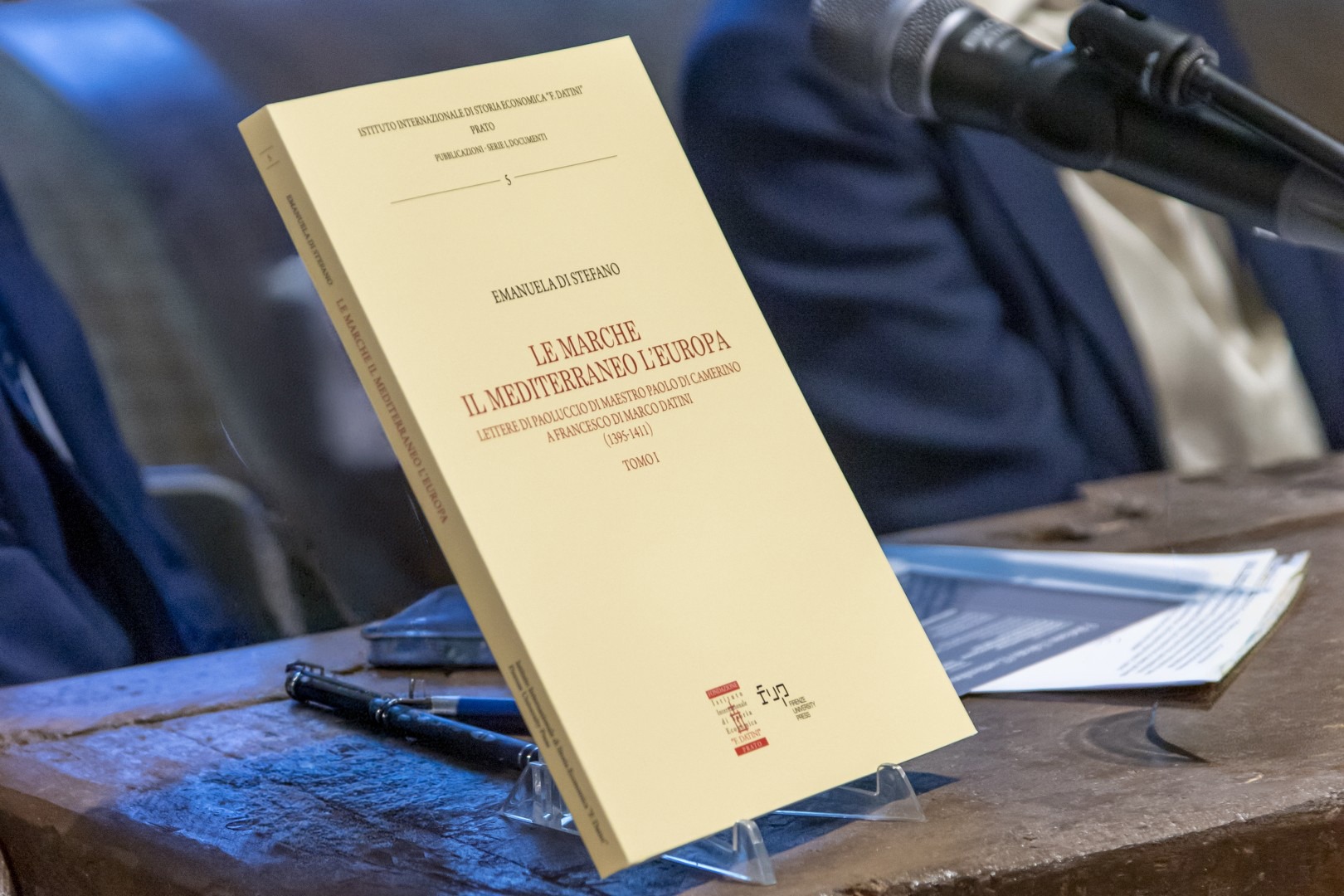
The collection comprises nearly six hundred letters: an extraordinary source for understanding the economic and social dynamics of the late fourteenth and early fifteenth centuries, as well as a remarkable resource for the history of paper.
Paoluccio’s correspondence with Datini reveals that a significant share of the paper sold in Venice originated in Fabriano and the Marche region, where it was highly valued for its quality and subsequently exported to Catalonia, Flanders, and England.
Through the words of a merchant who lived more than six centuries ago, we rediscovered the central role played by the Marche region and Fabriano paper within European trade networks between the fourteenth and fifteenth centuries. It is a compelling story that confirms how the quality of Fabriano paper was already widely recognized and sought after far beyond the borders of its place of origin.
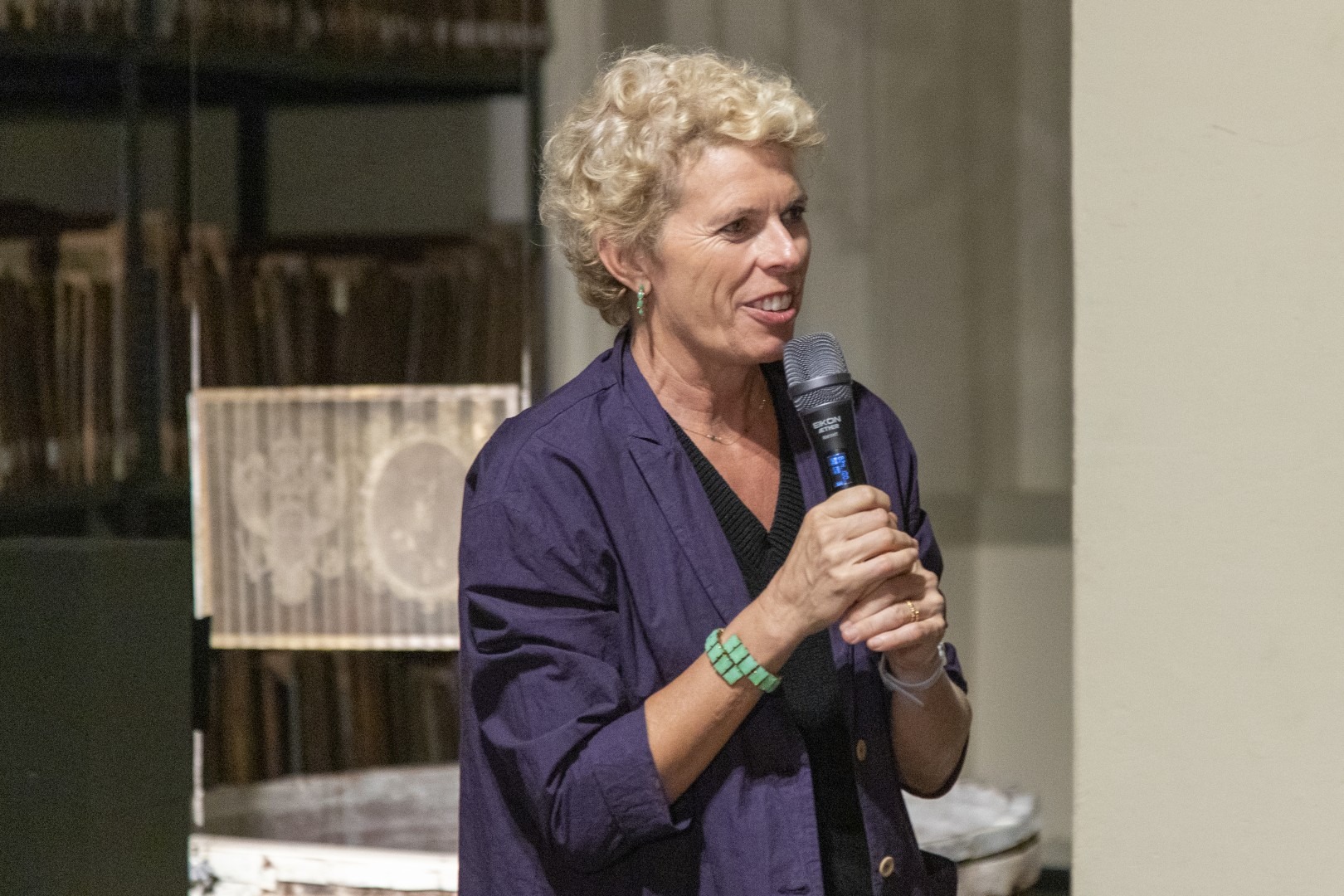
The volume was presented by Angela Orlandi, Professor at the University of Florence and Scientific Director of the “F. Datini” International Institute of Economic History Foundation; Renzo Sabbatini, former Professor at the University of Siena; and the author Emanuela Di Stefano, historian of the medieval economy and society, former adjunct professor at the University of Macerata and collaborator with the University of Camerino. The discussion was moderated by Professor Claudio Pettinari of the University of Camerino.
The initiative received the free patronage of the Municipality of Fabriano, the Marche Region, the “F. Datini” Foundation, the University of Camerino, the Pia Università dei Cartai, and the Carifac Foundation.
The history of paper continues to remind us how Fabriano played a leading role in a network of trade, relationships, and innovation that spanned centuries.